
MDF vs plywood vs particleboard cabinets: what actually lasts
MDF vs plywood kitchen cabinets is the wrong fight. Each board has a job it does best, and edges, joints and water decide how long cabinets last more than the board does.
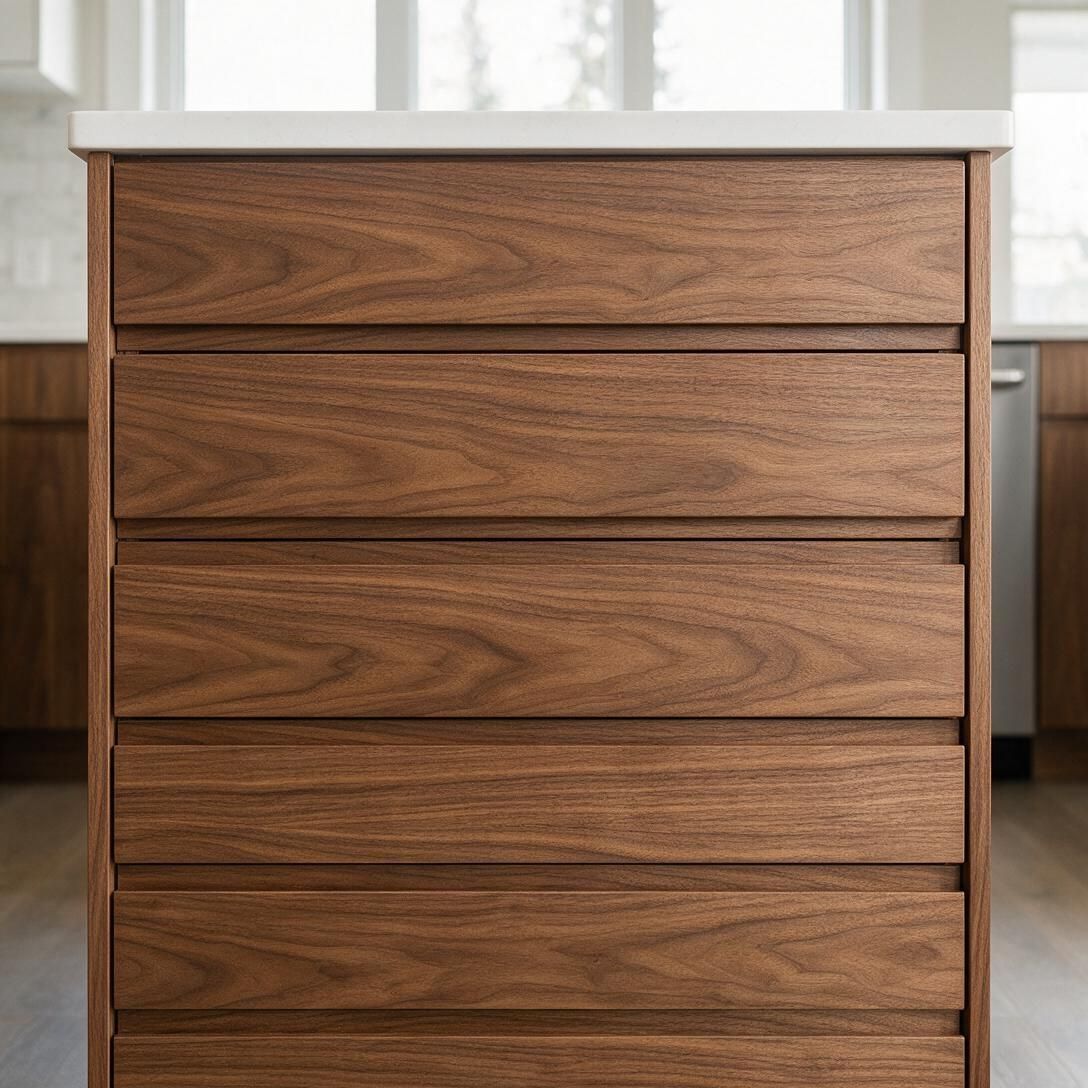
MDF vs plywood kitchen cabinets is one of the most searched cabinet questions, and most answers online pick a winner. The truth is less dramatic: each board is good at some jobs and poor at others. Cabinets fail at their edges, joints and hinge screws, and from water. Pick the right board for each part, build it properly, and all three can last decades.
Here is how we think about it at Boreal.
The three boards, in plain terms
Particleboard (melamine-faced board)
Particleboard is wood chips and resin pressed into a flat panel. On its own it is not something you want in a kitchen. Faced with melamine (also called TFL, thermally fused laminate) it becomes the most common cabinet box material in Europe and Canada. Mills such as Egger and Uniboard make it in 18 to 19 mm thickness with a hard, wipeable surface in white, colours and woodgrains.
Its strength depends heavily on density and edge sealing. A good board with a 1 to 2 mm edge band applied hot by machine is stable and flat. A cheap board with a thin iron-on edge, or an unsealed cut, will swell the first time water sits on it.
MDF (medium-density fibreboard)
MDF is made from fine wood fibres and resin. It is dense, very flat and has no grain, so it machines cleanly and takes paint well. That is why almost every painted door, shaker or slab, is MDF. It is heavy, and like particleboard it swells if water gets into a raw edge. Moisture-resistant (MR) grades exist and are worth using near sinks.
Plywood
Plywood is thin wood veneers glued in alternating directions. It is lighter than MDF, holds screws well, and resists sagging over long spans. Its edges show layers and need banding or a solid wood strip. Quality varies a lot: voids in the inner plies, uneven thickness and face veneer so thin it sands through are all common in lower grades. Good plywood boxes are typically prefinished maple or birch plywood.
Side by side
| Melamine particleboard | MDF | Plywood | |
|---|---|---|---|
| Best use | Cabinet boxes, shelves, closet systems | Painted doors and panels | Boxes, sink bases, long shelves |
| Surface | Factory finish, no painting needed | Paints and lacquers best | Veneer face, needs finish |
| Flatness | Very good | Excellent | Good, can bow slightly |
| Screw holding | Good with the right fasteners | Fair at edges | Very good |
| Water at a raw edge | Swells | Swells | Tolerates more, can delaminate |
| Weight | Medium | Heavy | Lightest |
| Relative cost | Lowest | Medium | Highest |
What actually lasts: the parts that matter more than the board
Edges
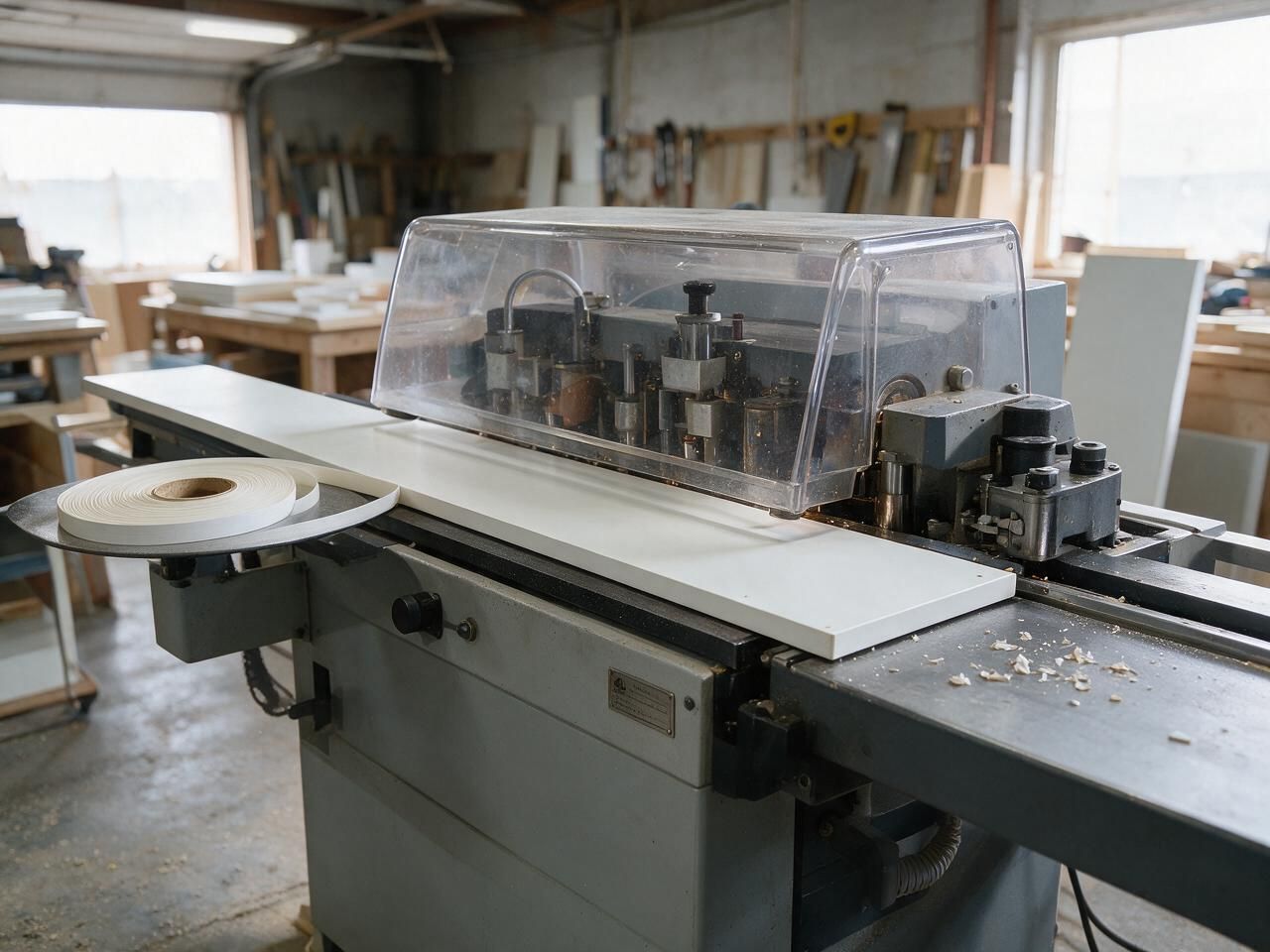
An exposed particleboard or MDF edge is where water gets in. Every edge we cut is banded on our own edge-bander, including the back edges of shelves and the bottom edges of gables. Ask any cabinet maker whether edges inside the sink base are sealed.
Joints and assembly
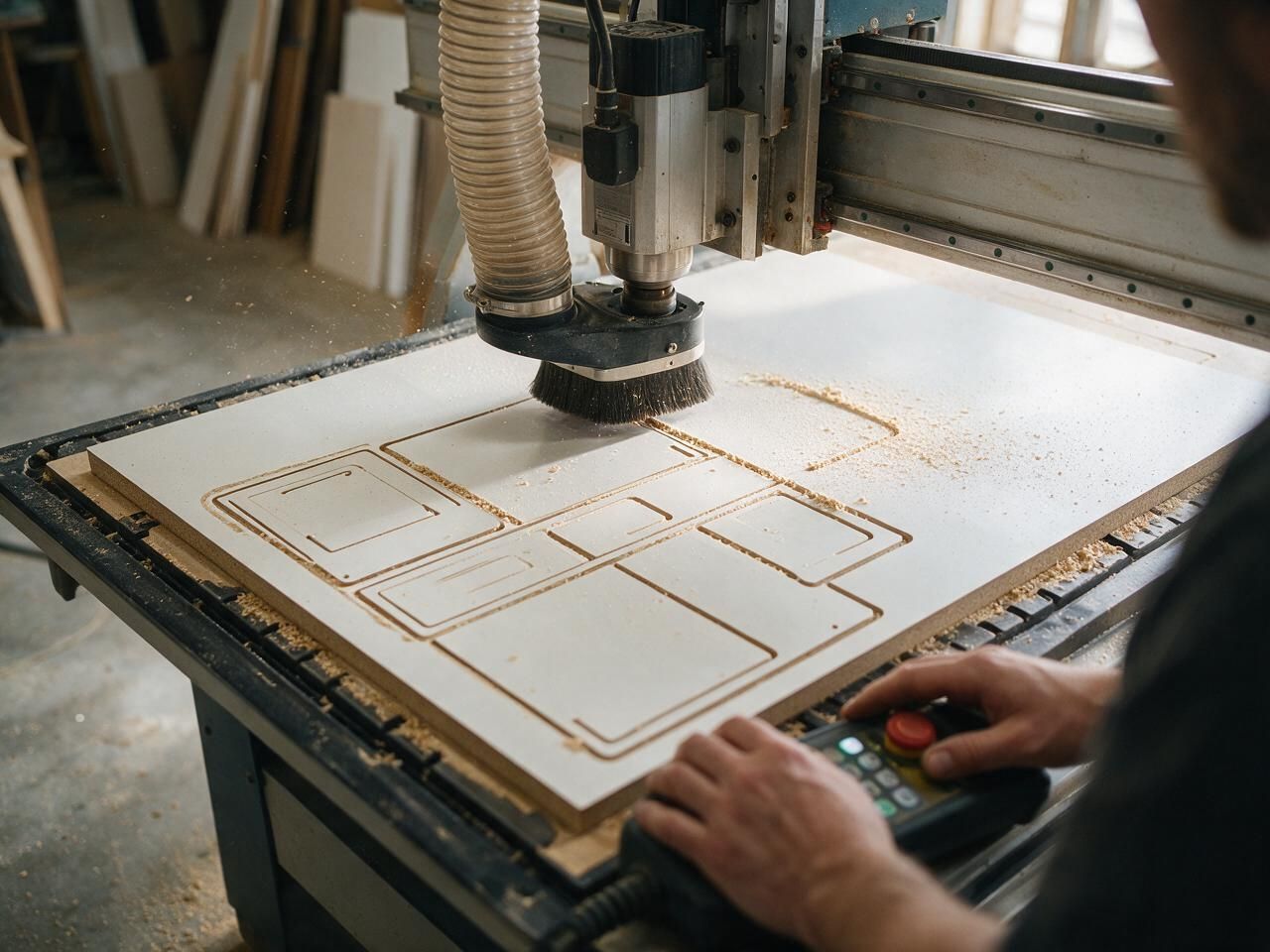
Frameless European-style boxes rely on dowels and confirmat screws, or on cam fittings. Done right, with glue and accurate CNC drilling, the box is rigid. Done badly, it racks out of square and doors never line up.
Hinge and runner fixing
Hinges carry the door's weight on a few screws. Blum hinges and runners mount with system screws designed for particleboard and MDF. The board you choose matters less here than using the right screws and drilling positions.
Shelf span
A 3/4 inch shelf in melamine or MDF starts to sag under heavy loads over about 30 inches. Plywood does better. Long shelves for dishes or books should be shorter, thicker, or supported in the middle.
The sink base
This is the one place where we discuss plywood or moisture-resistant board with every client. A slow drip under a sink can sit unnoticed for months. Plywood tolerates it better, though no board survives standing water forever. A leak tray and a quick look under the sink once a month do more than any board.
The best material for kitchen cabinets, part by part
- Boxes: melamine-faced particleboard from a known mill, fully edge-banded. Plywood if you prefer, at extra cost.
- Sink base: plywood or moisture-resistant board, plus a drip tray.
- Painted doors: MDF, never plywood. Plywood grain telegraphs through paint.
- Wood-look doors: wood veneer on MDF or particleboard core, or solid wood frames with veneered panels.
- Long open shelves: plywood or thicker board, spans kept short.
This is how we build by default at Boreal: 18–19 mm Egger or Uniboard melamine boxes, MDF for painted fronts, and plywood on request. We cover the brands in Egger, Blum, Richelieu: European brands explained.
Does plywood cost a lot more?
Plywood boxes usually add a meaningful amount to the cabinet portion of a kitchen, and the benefit depends on how the kitchen is used. For a typical home kitchen we would rather spend that money on better drawers and hardware. Our standard prices per linear foot are on the pricing page.
What about solid wood?
Solid wood is beautiful on door frames, face frames and open shelves, and it can be sanded and refinished many times. It moves with humidity, though, and Edmonton swings from very dry winter air to more humid summers. Wide solid panels can crack or cup, which is why even premium solid wood doors usually combine a solid frame with a veneered MDF or floating centre panel. We rarely recommend solid wood for cabinet boxes: it costs much more and adds nothing a good sheet material does not already do.
Signs your existing cabinets are failing
- Swollen or flaking edges at the sink base or dishwasher side
- Hinges that will not stay adjusted, or screws that spin
- Shelves with a permanent sag
- Doors that rub or gap even after adjustment
If the damage is limited, cabinet repair can replace a sink base or re-fix hinges. If it is widespread, start with custom kitchen cabinets. Our warranty covers new cabinet boxes for 5 years and Blum hardware for 10.
Cabinet material questions
01What is the best material for kitchen cabinets?+
For most kitchens: edge-banded melamine-faced board for boxes, MDF for painted doors, and plywood or moisture-resistant board for the sink base. Build quality matters as much as the board.
02Is MDF or plywood better for kitchen cabinets?+
MDF is better for painted doors because it is flat and grainless. Plywood is better for boxes that may see water and for long shelves. Neither is better everywhere.
03Are particleboard cabinets bad?+
Cheap, thin particleboard with poor edges is. Dense 18–19 mm melamine board from a known mill, fully edge-banded and assembled accurately, is the standard for European-style cabinets.
See the boards before you choose
Book a visit by appointment and handle the materials yourself, or ask us to bring samples to your measure.