
Best paint for kitchen cabinets (and why spraying matters)
The best paint for kitchen cabinets depends on the surface underneath and how the finish goes on. Primer and spraying matter as much as the can you buy.
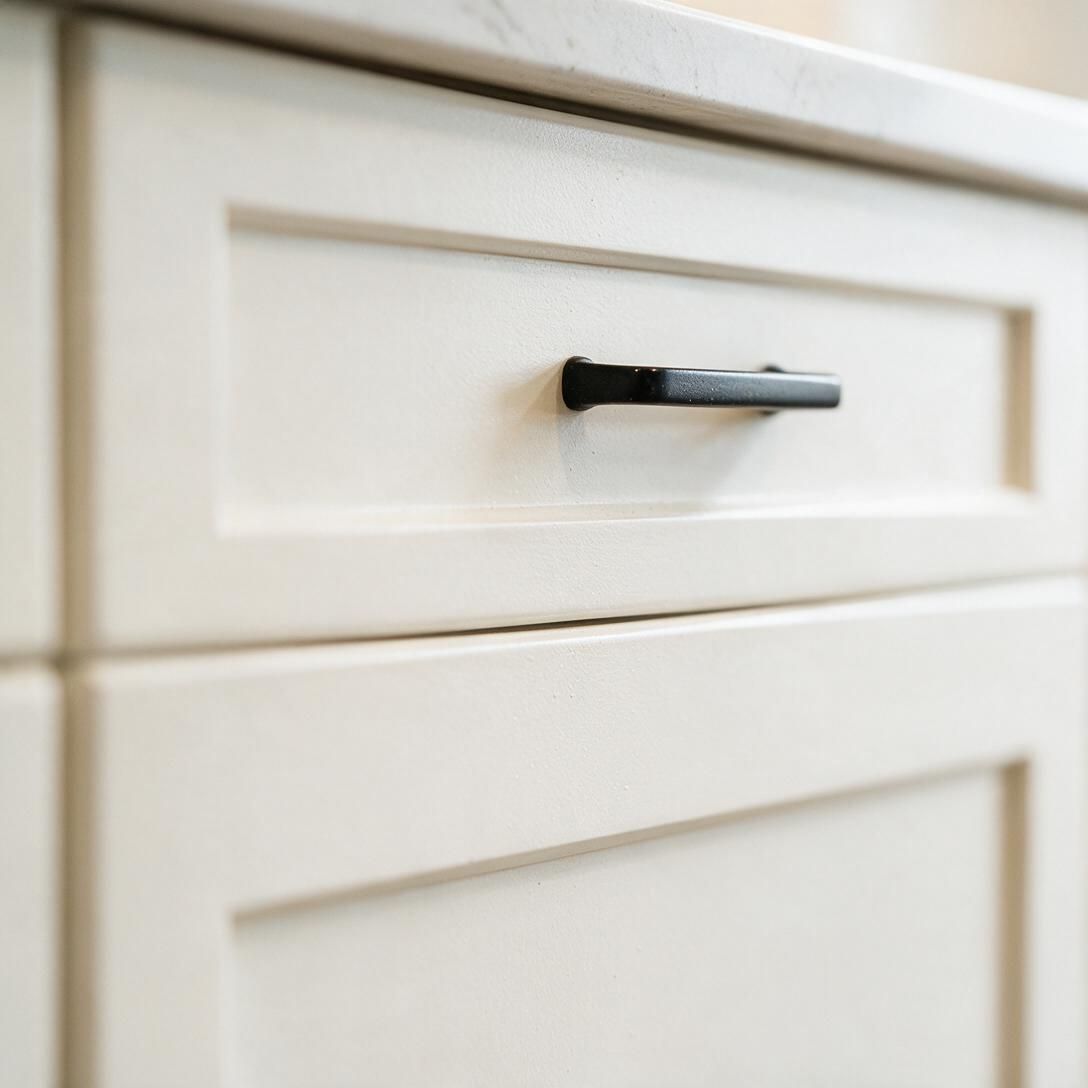
The best paint for kitchen cabinets is not one product. It depends on what the cabinets are made of, who is applying the finish and how it goes on. A cabinet door is handled, splashed and wiped more than any wall in the house, so wall paint, even a good one, is the wrong choice. Here is what works, what does not, and why spraying makes such a difference.
First, what are your cabinets made of?
Paint sticks to some surfaces far better than others.
| Cabinet surface | Can it be painted? | Notes |
|---|---|---|
| Solid wood (oak, maple, birch) | Yes | Oak's open grain shows through paint unless it is filled first |
| MDF (painted or raw) | Yes | The best surface for paint |
| Wood veneer | Yes, with care | Sand lightly; veneer is thin |
| Melamine (TFL) | With a bonding primer, risky | Smooth, hard surface; adhesion depends on prep and primer |
| Thermofoil | Not recommended | Paint does not bond reliably; foil can peel on its own |
| High-gloss laminate or acrylic | Not recommended | Replace doors instead |
If your doors are thermofoil or gloss, painting is the wrong project. Look at cabinet refacing instead.
The paint types, compared
Waterborne urethane-modified alkyd and acrylic enamels
These are the best brush-and-roller options for a homeowner. They level out better than wall paint, dry hard and clean up with water. Their weakness is cure time: they feel dry in hours but can take weeks to reach full hardness. Stacking dishes or banging doors in that window marks them.
Oil-based alkyd enamel
Hard and smooth, with excellent levelling, but slow to dry, strong smelling, and prone to yellowing over time, especially in whites and in cabinets away from daylight. Fewer people use it now.
Two-component (2K) polyurethane and catalyzed coatings
These are professional finishes. A hardener is mixed in before spraying, and the coating cures chemically into a tough, uniform film that resists scratching, chemicals and moisture. They need spray equipment, a controlled environment and protective gear. This is the class of finish factory-painted cabinets use.
Chalk paint and wall paint
Fine for furniture projects. Not for kitchen doors. They mark, stain and wear through at handles quickly unless top-coated, and even then they do not match a cabinet coating.
Primer matters as much as paint
Most failed cabinet paint jobs fail at the primer, not the topcoat.
- Clean first. Kitchen doors carry a film of cooking grease. Degrease thoroughly, rinse, and let them dry.
- Scuff sand. The goal is grip, not bare wood.
- Use the right primer. A shellac-based or bonding primer for slick or stained surfaces. Shellac-based primer also blocks the tannin bleed that turns white paint yellow over oak.
- Fill grain if you want it smooth. Oak needs grain filler, or the texture will show through every coat.
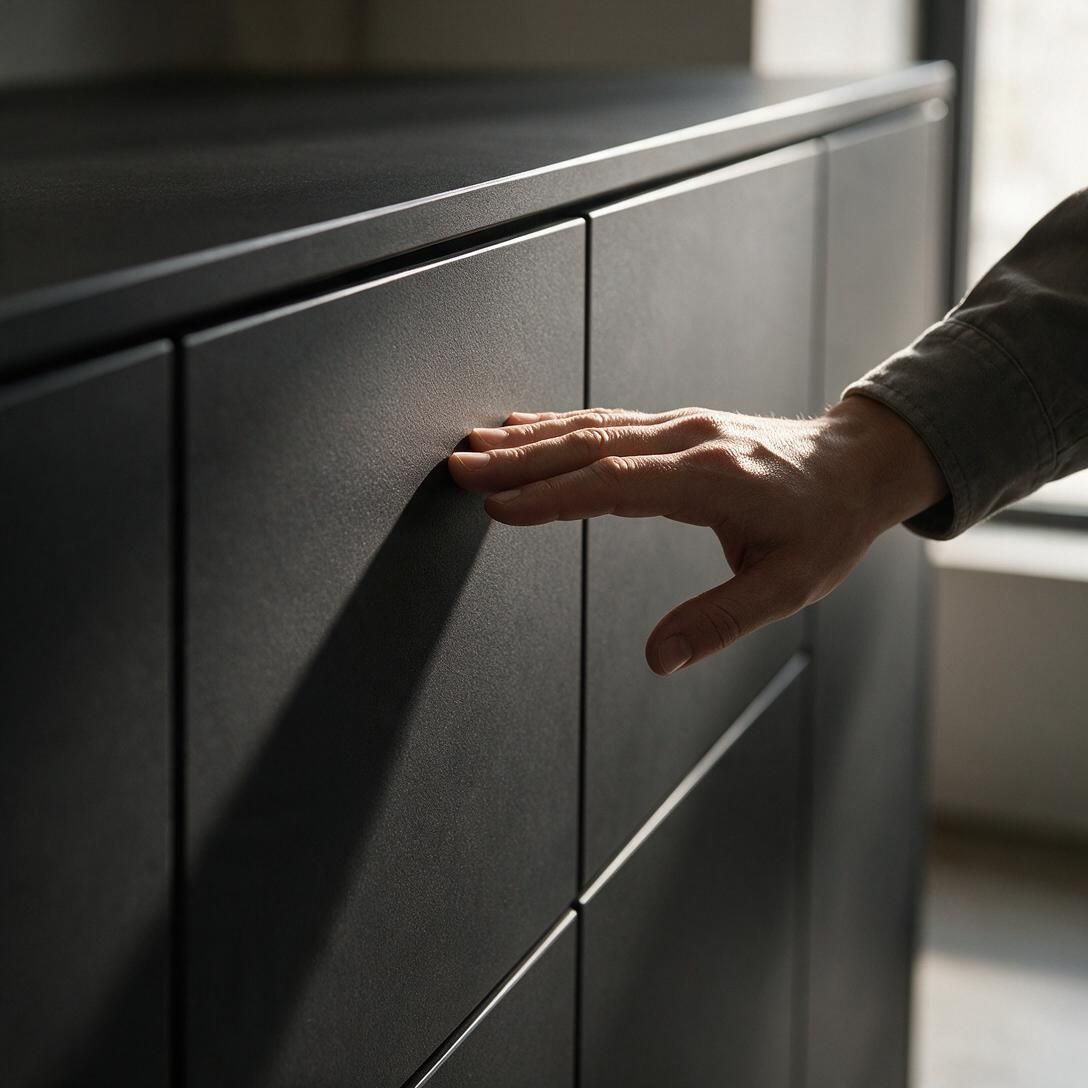
Why spraying matters
You can brush a good result. You cannot brush a factory result. Spraying makes a difference for four reasons.
- No brush or roller marks. A sprayed coat is an even film with no texture to catch light.
- Thin, even coats. Several thin coats cure harder and chip less than a few thick ones.
- Edges and profiles. Shaker frames and raised panels have inside corners where brushes leave drips and pooling. Spray reaches them evenly.
- Flat drying. Doors and drawer fronts sprayed lying flat, both sides, in a dust-controlled space, come out without runs.
Professional cabinet spraying in Edmonton usually works like this: doors and drawer fronts are removed, labelled and sprayed off site; cabinet faces and end panels are masked and sprayed in place; hardware is refitted and adjusted at the end.
If you paint them yourself: a realistic plan
DIY can work well on solid wood or MDF doors if you accept the time it takes. A realistic sequence:
- Remove doors, drawer fronts and hardware. Label every piece and its hinge position with tape.
- Degrease, rinse and dry everything, including the cabinet faces.
- Scuff sand with fine grit, vacuum and wipe with a tack cloth.
- Prime, let it dry fully, then lightly sand any raised grain.
- Apply two thin topcoats, sanding lightly between them. Doors lying flat give the best result.
- Wait as long as the product allows before rehanging, and longer before heavy use.
Expect each round of coats to take a weekend for an average kitchen, and plan for the kitchen to be partly out of use for a couple of weeks. The common mistakes are skipping the degreasing, rushing the primer and rehanging doors before the paint has hardened, which leaves marks from bumpers and hinges.
Cabinet painting cost
Refinishing a typical kitchen with us, doors and drawer fronts sprayed plus faces and end panels refinished, costs about $4,000 to $9,000, CAD before GST. The main variables are:
- How many doors and drawer fronts (roughly, the length of your cabinet run)
- Door style: slab is fastest, shaker sits in the middle, raised panel takes longest
- One colour or two-tone
- Repairs: filling old handle holes, fixing chipped edges, replacing worn hinges
DIY materials cost much less, but plan on many evenings and a kitchen out of commission for a while.
Refacing vs refinishing cabinets
Refinishing keeps your doors and changes the colour. Refacing replaces doors and fronts with new ones in any style. If you like your door shape, refinishing is the cheaper route. If you want a different style, or your doors are thermofoil or damaged, refacing is better. We compare all three options, including full replacement, in cabinet refacing vs replacing.
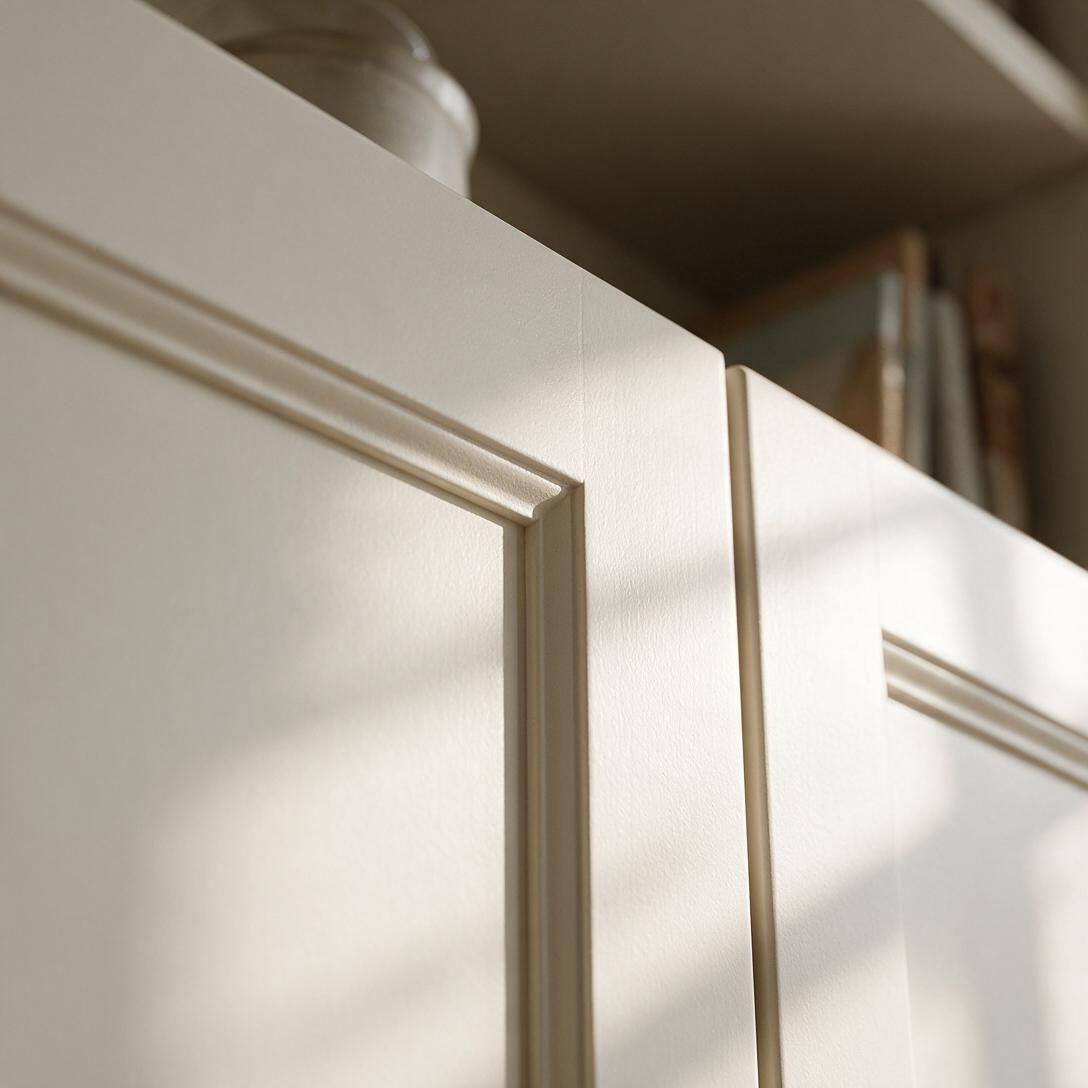
Colour advice
- Whites and off-whites need the most prep on oak, because grain and tannin show.
- Mid and deep colours such as greens, blues and greige hide wear at handles better than bright white.
- Two-tone works well: darker base cabinets or island, lighter uppers.
- Sheen: satin or matte for most kitchens. Gloss shows every flaw in the door underneath.
While the doors are off
Refinishing is the right moment for new soft-close hinges and drawer runners. See hardware upgrades. For our full service, read cabinet painting and refinishing, and for every range we publish see pricing.
Price a cabinet refinishing job
Set the size of your kitchen and the door style to see a range for professional spraying.
Cabinet painting questions
01What is the best paint for kitchen cabinets?+
For DIY, a waterborne urethane-modified enamel over a proper primer. For a factory-like finish, a sprayed two-component coating applied by a professional.
02How much does cabinet painting cost in Edmonton?+
Professional refinishing of a typical kitchen with us costs about $4,000 to $9,000, CAD before GST, depending on size, door style and repairs.
03Can you paint thermofoil cabinets?+
We do not recommend it. Paint does not bond reliably to thermofoil, and the foil can peel. Refacing with new doors is the safer option.
04How long does painted cabinetry take to cure?+
Many enamels feel dry in hours but take weeks to reach full hardness. Treat the doors gently for the first few weeks.
Get a quote for spraying your cabinets
Send photos of your doors and the inside of one cabinet. We will tell you if they can be painted and give you a range.